
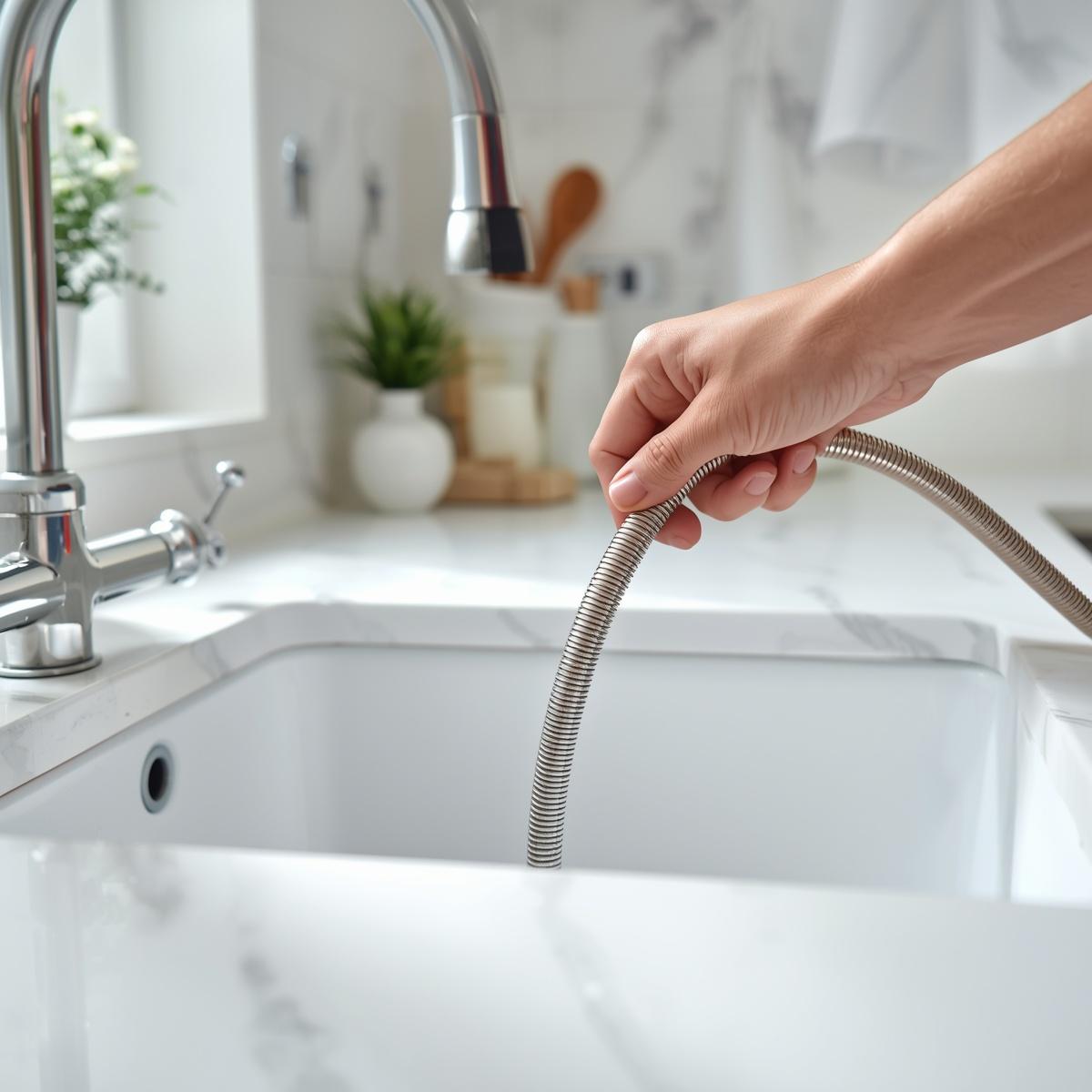
A slow-draining sink can be frustrating. Water pools, drains slowly, and makes everyday tasks like washing dishes or brushing your teeth inconvenient. The confusing part is when the sink isn’t fully clogged, it just drains slowly.
Thank you for reading this post, don't forget to subscribe!The good news is that this is a very common issue and usually easy to fix without calling a plumber. In most cases, buildup inside the pipes is restricting water flow, even if there isn’t a complete blockage.
This guide walks you through simple steps to fix a slow-draining sink using basic tools.
Quick Tools You May Need
Before starting, having the right tools makes the process easier:
• Drain snake (hand auger)
• Plunger (sink size)
• Baking soda and vinegar
• Adjustable wrench
Why Your Sink Drains Slowly
A slow drain usually means there is a partial blockage inside the pipe. Water can still pass through, but not efficiently.
Common causes include:
- grease buildup (kitchen sinks)
- soap residue
- hair accumulation
- food particles
- mineral deposits
Over time, these materials narrow the pipe and slow down drainage.
Step 1: Flush with Hot Water
Start with the simplest solution.
Boil water and pour it slowly down the drain. This can help dissolve grease and loosen buildup.
This method works best for kitchen sinks with light grease accumulation.
Step 2: Use Baking Soda and Vinegar
For a natural cleaning method:
- Pour baking soda down the drain
- Add vinegar
- Let it sit for 10–15 minutes
- Flush with hot water
This combination helps break down residue and clear minor buildup.
Step 3: Use a Plunger
A sink plunger can help loosen partial blockages.
How to use it:
- cover the drain completely
- pump up and down several times
- remove and check drainage
This can help move debris further down the pipe.
➡ Check sink plungers on Amazon
Step 4: Use a Drain Snake
If the problem persists, a drain snake is one of the most effective tools.
A drain snake reaches into the pipe and pulls out debris like hair, grease, and buildup.
How to use it:
- Insert the snake into the drain
- Rotate the handle
- Pull it out slowly
- Remove debris
➡ View drain snake options on Amazon
Step 5: Clean the P-Trap
The P-trap is the curved pipe under the sink. It often collects debris.
To clean it:
- Place a bucket underneath
- Use an adjustable wrench to loosen connections
- Remove the trap
- Clean out buildup
- Reattach the pipe
➡ Check adjustable wrench options on Amazon
Step 6: Check the Vent System (Advanced)
If your sink is still draining slowly, the issue may involve the vent system, which helps regulate air pressure in pipes.
This is less common and may require professional help.
Tips to Prevent Slow Drains
Prevent future problems by:
- avoiding pouring grease down the sink
- using a drain strainer
- regularly flushing with hot water
- cleaning drains periodically
Related Guides
You may also find these helpful:
• Toilet Keeps Running After Flush? Here’s How to Fix It
• Essential Tools Every Home Should Have for Repairs
• How to Prepare Your Home for a Power Outage
Disclaimer: This article is for informational purposes only. Always use proper safety precautions and consult a qualified professional when necessary.