
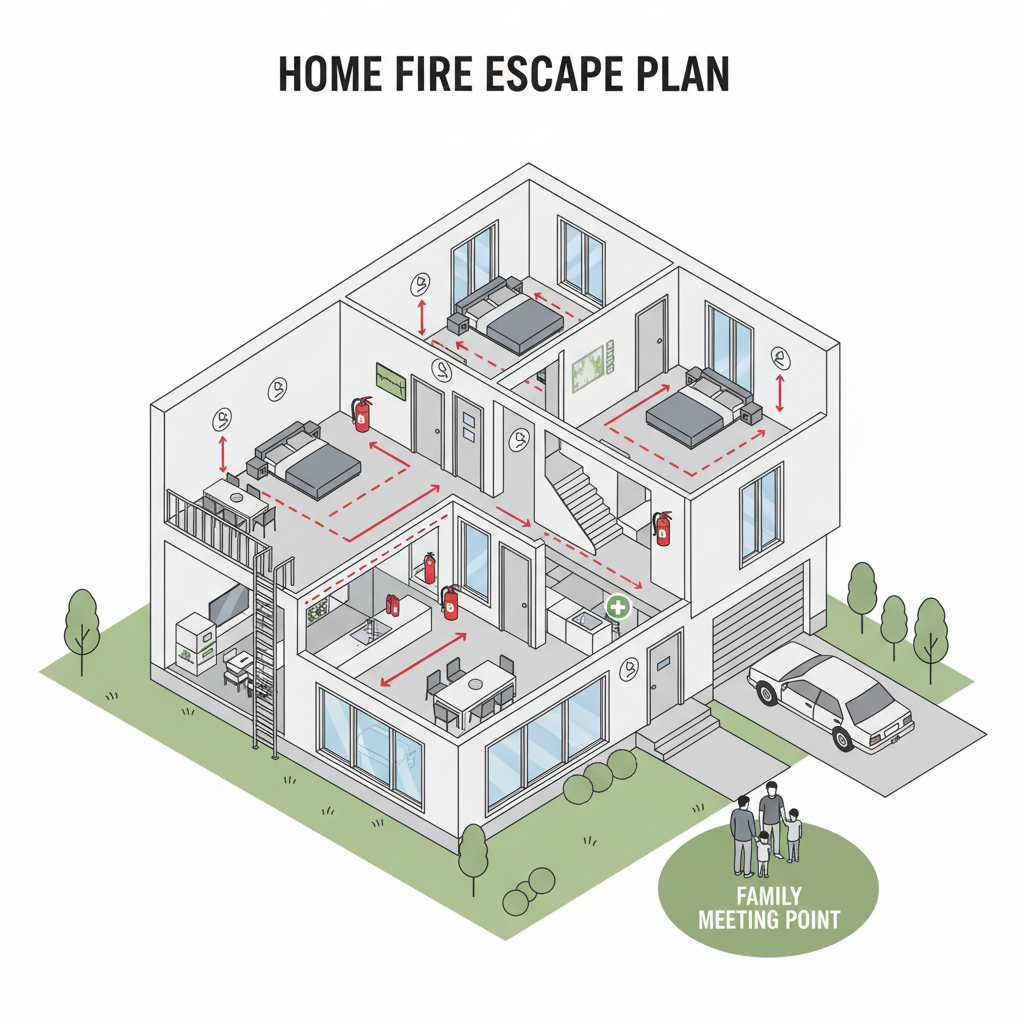
House fires can spread quickly, sometimes filling a home with smoke in just a few minutes. Because of this, fire safety experts recommend that every household create a clear fire escape plan.
Thank you for reading this post, don't forget to subscribe!Knowing exactly how to exit the home during an emergency can save valuable time and help families evacuate safely.
Below are key steps for building a simple and effective fire escape plan.
1. Identify Two Exits From Every Room
Each room should have at least two possible escape routes.
Typical options include:
- the main door
- a window
- a secondary hallway exit
Families should identify these routes ahead of time so everyone understands how to leave the home quickly.
2. Install Smoke Detectors in Key Areas
Smoke detectors provide early warning when a fire starts.
Recommended placement:
- every bedroom
- hallways
- each level of the home
Affiliate Link Placement
Recommended products:
3. Keep Fire Escape Ladders in Second-Floor Bedrooms
If stairways become blocked by smoke or flames, a window exit may be necessary.
Portable fire escape ladders allow residents to climb down safely from upper floors.
Affiliate Link Placement
Recommended products:
4. Choose a Family Meeting Point
Families should select a meeting location outside the home where everyone gathers after exiting.
Examples include:
- a tree
- a mailbox
- a nearby sidewalk location
This helps ensure everyone is accounted for.
5. Practice Fire Drills
Fire escape plans work best when practiced regularly.
Families should rehearse evacuation steps so everyone knows how to respond quickly.
Practicing helps reduce confusion during real emergencies.
6. Keep Fire Safety Tools Accessible
Basic fire safety tools help households respond quickly during emergencies.
Affiliate Link Placement
Recommended products:
7. Stay Low to Avoid Smoke
During a fire, smoke rises quickly and can make breathing difficult.
Crawling close to the floor helps reduce smoke exposure while exiting the home.
Conclusion
Creating a home fire escape plan is one of the most important safety steps a household can take. Preparing escape routes, installing detectors, and keeping essential safety tools nearby helps families respond quickly during emergencies.
A few minutes of planning today can make a life-saving difference in the future.
Disclaimer: This article is for informational purposes only. Always use proper safety precautions and consult a qualified professional when necessary.