
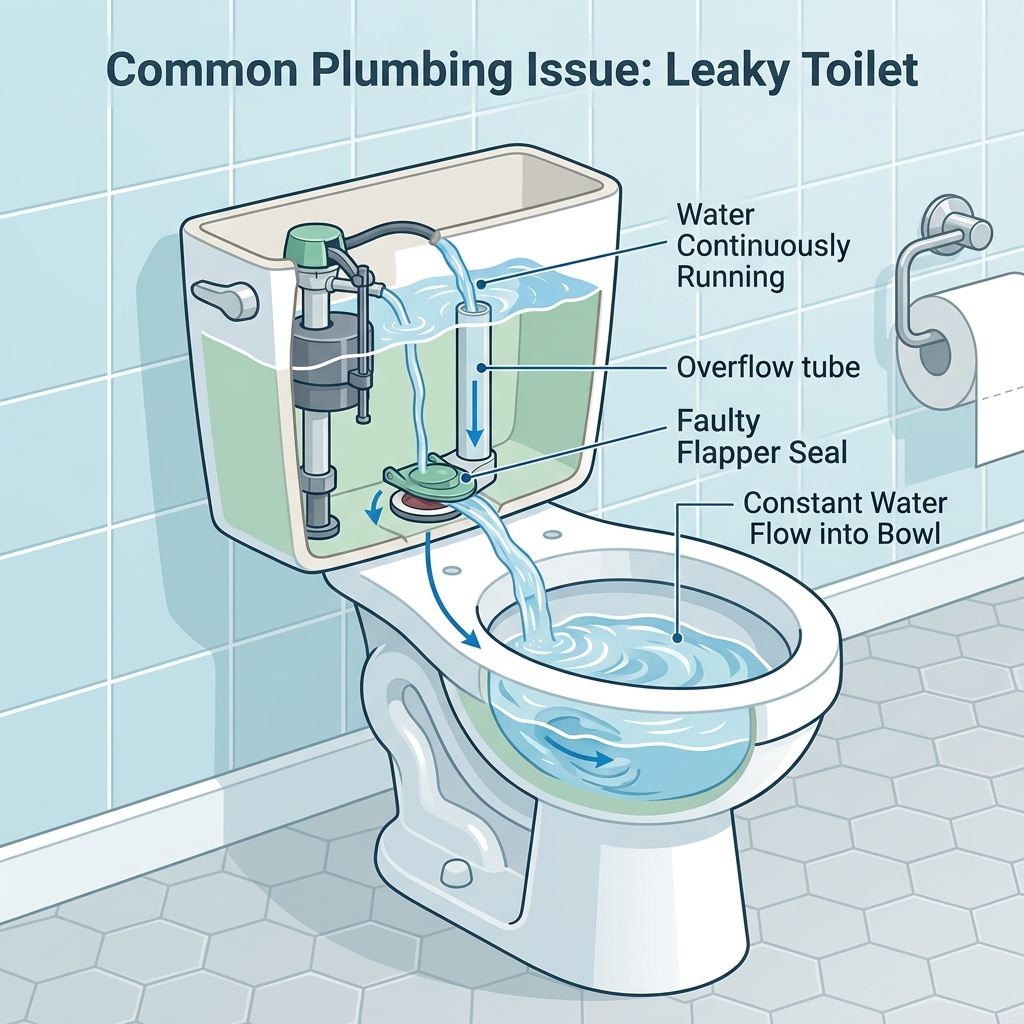
A running toilet is one of the most common household problems. You flush, and instead of stopping, the water keeps flowing. This can waste a significant amount of water and increase your utility bill over time.
Thank you for reading this post, don't forget to subscribe!The good news is that most running toilet issues are easy to fix without calling a plumber. In many cases, you only need a few simple tools and inexpensive replacement parts.
This guide walks you through how to fix a running toilet step by step.
Quick Tools You May Need
Before starting, it helps to have a few basic tools ready:
• Toilet flapper replacement
• Fill valve repair kit
• Adjustable wrench
• Screwdriver set
Having these on hand can make the repair faster and easier.
Why Your Toilet Keeps Running
A toilet continues running when water keeps flowing from the tank into the bowl. This usually happens because one of the internal components is not sealing or functioning properly.
The most common causes include:
- a worn or damaged flapper
- a faulty fill valve
- an improperly adjusted float
- a loose or tangled chain
Identifying the cause is the first step toward fixing the issue.
Step 1: Check the Flapper
The flapper is a rubber seal at the bottom of the toilet tank. It lifts when you flush and then closes to stop water from flowing.
If the flapper is worn, warped, or not sealing properly, water will continue to leak into the bowl.
What to do:
- Remove the tank lid
- Flush the toilet
- Watch the flapper as it closes
- Check for gaps or improper sealing
If the flapper looks worn or doesn’t seal tightly:
➡ Check replacement flappers on Amazon
Replacing a flapper is one of the easiest and most effective fixes.
Step 2: Inspect the Chain
The chain connects the flush handle to the flapper.
If the chain is:
- too short → flapper won’t close properly
- too long → it may get tangled
Fix:
Adjust the chain length so there is a slight slack when the flapper is closed.
This simple adjustment can sometimes stop the running immediately.
Step 3: Adjust the Float
The float controls how much water fills the tank. If it’s set too high, water will continuously flow into the overflow tube.
What to do:
- Locate the float (usually attached to the fill valve)
- Adjust it downward slightly
- Flush and observe
If the float is set correctly, the water should stop filling at the proper level.
Step 4: Check the Fill Valve
The fill valve controls water entering the tank. If it’s faulty, the toilet may keep running.
Signs of a bad fill valve:
- constant hissing sound
- slow or continuous water flow
- tank not filling properly
➡ View fill valve repair kits on Amazon
Replacing a fill valve is slightly more involved but still manageable for most homeowners.
Step 5: Tighten Connections
Sometimes the issue is caused by loose components inside the tank.
Check:
- fill valve connections
- mounting nuts
- water supply line
Use an adjustable wrench if needed:
➡ Check adjustable wrench options on Amazon
When to Replace Parts
If your toilet continues running after adjustments, it may be time to replace components.
Common replacements include:
- flapper
- fill valve
- complete repair kits
These parts are affordable and widely available.
Related Guides
You may also find these helpful:
• Sink Draining Slowly but Not Clogged? Here’s How to Fix It
• Essential Tools Every Home Should Have for Repairs
• How to Prepare Your Home for Emergencies
(Add internal links to your blog posts.)
FAQ
Why does my toilet keep running after flushing?
This usually happens due to a faulty flapper, fill valve, or improper float adjustment.
Is it expensive to fix a running toilet?
No. Most repairs cost very little and can be completed with basic tools.
Can I fix a running toilet without a plumber?
Yes. Most running toilet issues are simple and can be fixed with basic DIY steps.
Final Thoughts
A running toilet may seem like a major issue, but it is often one of the easiest home repairs to fix. With a few basic tools and simple adjustments, most homeowners can resolve the problem quickly.
Fixing the issue early helps conserve water, reduce utility costs, and prevent more serious plumbing problems.
Disclaimer: This article is for informational purposes only. Always use proper safety precautions and consult a qualified professional when necessary.