
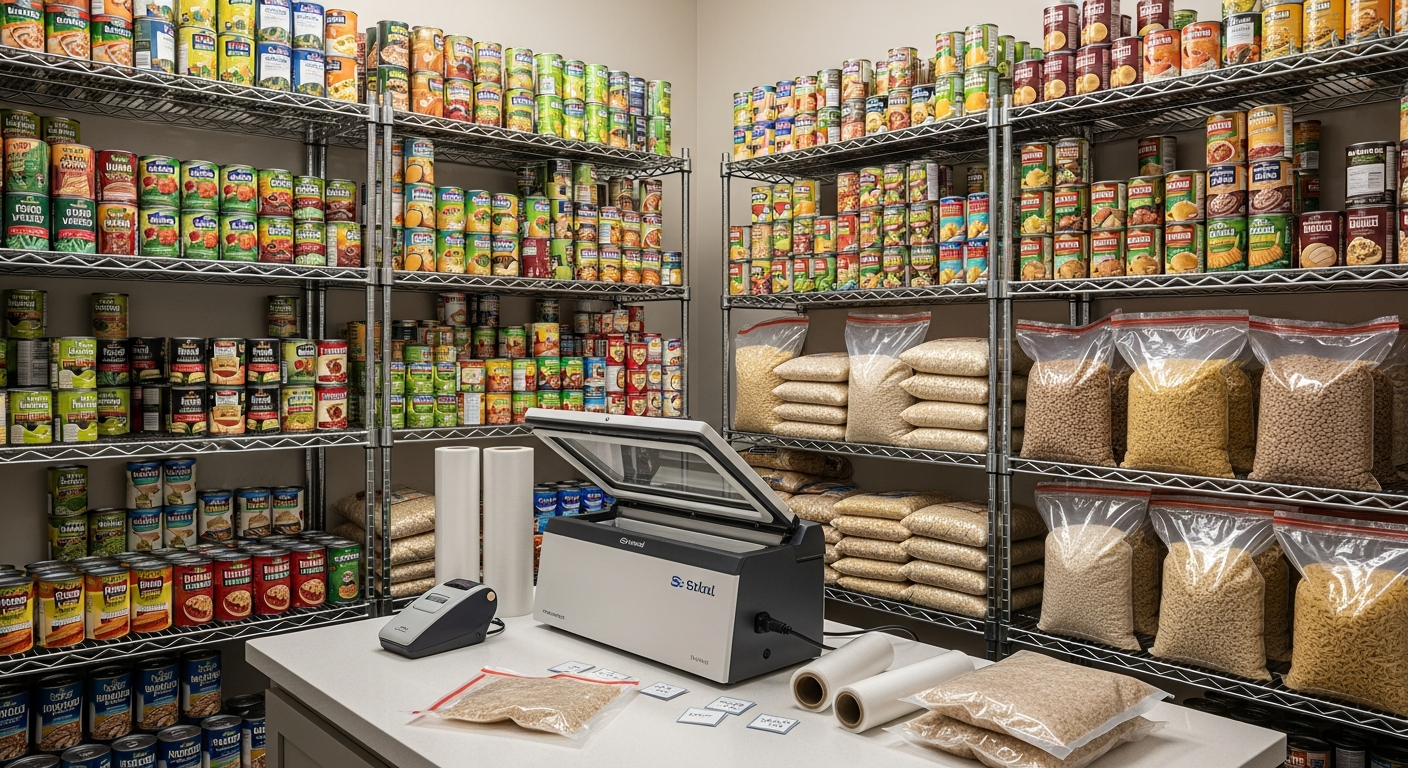
Emergency Food Storage Tools Every Household Should Consider
Building a robust emergency food supply involves more than just stacking cans on a shelf. To ensure your food remains safe, nutritious, and organized for the long term, investing in specialized preservation and storage tools is essential. These tools help extend shelf life and maximize the efficiency of your pantry space.
Thank you for reading this post, don't forget to subscribe!Introduction
Food supply disruptions can occur during severe weather events, infrastructure failures, or extended power outages. Proper food storage tools help households maintain access to basic nutrition during short-term emergencies.
Preparing a small reserve of non-perishable food allows families to remain stable when access to stores becomes temporarily limited.
Essential Tools for Emergency Food Storage
Building a reliable emergency food supply goes beyond simply storing canned goods. A well-prepared household considers how food will be preserved, organized, stored, and prepared if normal systems are disrupted.
The following tools help households maintain safe and accessible food supplies during emergencies.
Food Preservation Tools
Vacuum Sealer
A vacuum sealer is one of the most versatile tools for food storage. By removing air from packaging, it helps prevent oxidation and freezer burn, extending the shelf life of dry foods, frozen meats, nuts, and seeds.
Vacuum sealing is particularly useful for families who buy food in bulk or prepare meals ahead of time.
Recommended tools
• Vacuum sealers
• Vacuum storage bags
Food Dehydrator
Dehydrating is an excellent way to preserve seasonal fruits, vegetables, and meats (as jerky) without requiring a freezer. Dehydrated foods are lightweight and take up very little space, making them ideal for emergency kits or “bug-out” bags.
Many households use dehydrators to preserve seasonal produce or reduce food waste.
Recommended tools
• Food dehydrators
• Dehydration trays
Long-Term Storage Tools
Mylar Food Storage Bags and Oxygen Absorbers
For long-term storage of dry staples like rice, beans, and flour, Mylar bags are the gold standard. When paired with oxygen absorbers, they create an airtight, light-proof environment that can keep food viable for up to 25 years. These are a must-have for protecting bulk purchases from moisture and pests.
They can significantly extend the shelf life of dry foods.
Recommended tools
Mylar storage bags
Oxygen absorber packs
Airtight Food Storage Containers
Airtight containers help protect food from moisture, pests, and contamination.
They are commonly used to store dry foods such as:
- rice
- beans
- pasta
- grains
Recommended tools
• Airtight food storage containers
• Food-grade storage buckets
Gamma Seal Lids
Gamma Seal lids convert standard 5-gallon buckets into airtight storage containers. They replace traditional snap-on lids with a heavy-duty screw-top that keeps out air and moisture.
These lids are commonly used to store bulk foods like flour, grains, or beans.
Recommended tools
Food Organization Tools
Can Rotator Systems
Proper organization helps prevent food waste and ensures supplies remain fresh.
Organization is key to preventing food waste. A can rotator system ensures that you follow the “first-in, first-out” rule automatically. These shelves or racks feed the oldest cans to the front while you load newer ones in the back, keeping your supply fresh and easy to manage.
This makes it easier to maintain an organized pantry.
Recommended tools
• Can rotator storage racks
• Gravity-fed canned food organizers
Preparation Tools for Power Outages
Manual Grain Mill
Whole grains (like wheat berries) lasts much longer than storing processed flour. However, to use those grains, you need a way to process them.
A manual grain mill allows households to produce flour even during power outages, making it possible to prepare basic foods such as bread or porridge under any conditions.
Recommended tools
Water Filtration Systems
While not strictly for food, a gravity-fed water filter is vital for rehydrating freeze-dried meals and safe cooking during an emergency when tap water may be compromised.
Gravity-fed water filters allow households to treat water safely when municipal supplies are unavailable.
Recommended tools
• Gravity water filtration systems
Emergency Meal Kits
Emergency meal kits provide ready-to-eat food when cooking may not be possible.
These kits often include shelf-stable meals designed for long-term storage.
Recommended tools
• Emergency meal kits
• Freeze-dried food packs
Quick Emergency Food Storage Checklist
When preparing an emergency food supply, consider including the following tools:
✔ Airtight food storage containers
✔ Mylar bags and oxygen absorbers
✔ Vacuum sealing systems
✔ Can rotator racks for canned goods
✔ Food dehydrators for preserving produce
✔ Manual grain mills for whole grains
✔ Water filtration systems for cooking and drinking
✔ Emergency meal kits for situations when cooking is not possible
Keeping these tools available helps households organize, preserve, and access food supplies during unexpected disruptions.
Where Should Emergency Food Be Stored?
Emergency food should be stored in cool, dry, and dark locations whenever possible. Heat, moisture, and sunlight can shorten the shelf life of many foods.
Common household storage areas include:
- pantry shelves
- basement storage rooms
- closets or cabinets
- dedicated food storage shelves
If space is limited, consider using stackable containers or storage buckets to maximize available storage.
Proper organization helps households track expiration dates and rotate food supplies effectively.
Why Food Rotation Matters
Even long-term storage foods should be rotated regularly. Using the first-in, first-out method helps ensure older food is used before newer purchases.
Food rotation systems such as can rotator racks make this process easier by automatically moving older cans to the front of the shelf.
Simple food rotation habits help prevent waste and ensure emergency supplies remain fresh and usable.
FAQ
How long should emergency food supplies last?
Many preparedness plans recommend keeping at least a three-day supply of food per household member.
What foods store the longest?
Dry foods such as rice, beans, oats, and pasta typically store well for extended periods when stored properly.
Conclusion
Preparing an emergency food supply involves more than simply storing food. The right combination of preservation tools, storage systems, and preparation equipment helps households maintain reliable food access during unexpected disruptions.
With proper planning and organization, families can build food storage systems that support safety, resilience, and long-term preparedness.
Disclaimer: This article is for informational purposes only. Always use proper safety precautions and consult a qualified professional when necessary.