
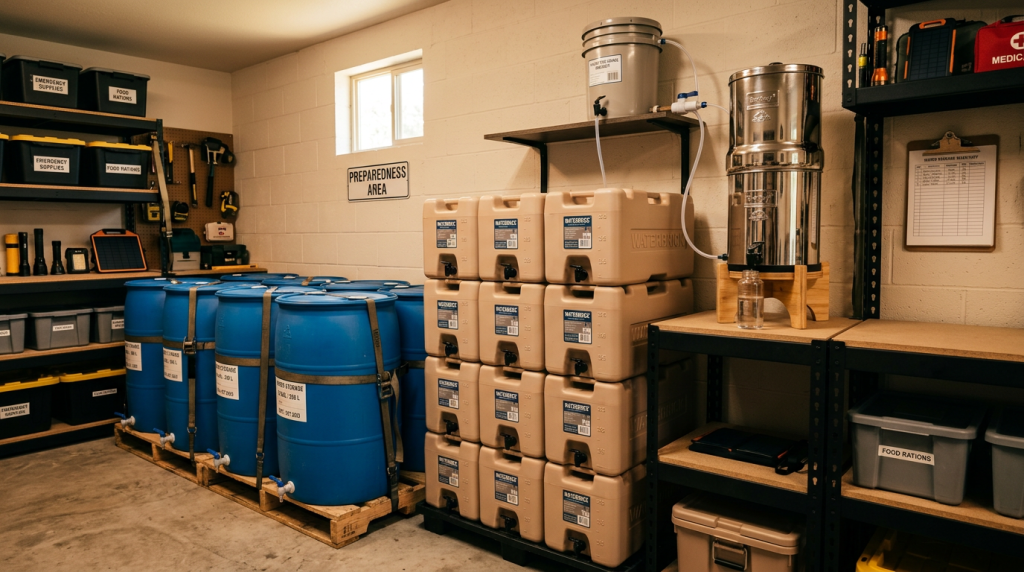
In emergency situations, access to clean drinking water becomes one of the most critical needs.
Preparedness guidelines commonly recommend storing at least one gallon of water per person per day.
Reliable water storage containers and purification tools help households maintain safe drinking water during storms, disasters, or infrastructure disruptions.
Below are several tools that help households store and maintain safe drinking water during emergencies.
Essential Emergency Water Storage Containers
Stackable Water Bricks
Stackable water bricks are compact containers designed for tight storage spaces such as closets, utility rooms, or under beds. Their interlocking design allows them to stack securely while maximizing limited space.
These containers typically hold about 3–3.5 gallons of water and are made from BPA-free plastic designed for potable water storage.
Recommended tools
• Stackable water storage containers
• BPA-free water bricks
55-Gallon Water Storage Drums
Large water storage drums are commonly used for long-term bulk storage. Made from food-grade polyethylene, these containers allow households to store significant amounts of water in garages, basements, or storage areas.
They are especially useful for families preparing for extended emergencies.
Recommended tools
• 55-gallon water storage drums
• Food-grade bulk water containers
Bathtub Water Bladders
Bathtub water storage bags provide a temporary emergency solution. When severe weather or disasters are expected, these liners can hold up to 100 gallons of potable water using the bathtub as a container.
This allows households to quickly increase water reserves before an emergency.
Recommended tools
•Bathtub Water Bladders (WaterBOB)
Water Filtration and Purification Tools
Gravity Water Filters
Gravity filtration systems allow water to pass through specialized filters that remove bacteria, protozoa, and many contaminants. These systems operate without electricity, making them ideal during power outages.
Recommended tools
• Portable gravity water filters
• Emergency filtration systems
Water Purification Tablets
Purification tablets provide a lightweight and portable solution for disinfecting water when stored supplies run out. Chlorine dioxide or iodine tablets can help neutralize bacteria and viruses in untreated water.
These are commonly included in emergency preparedness kits or go-bags.
Recommended tools
• Water purification tablets
• Emergency water treatment kits
Maintenance and Safety
Proper water storage requires occasional maintenance to keep supplies safe.
Best practices include:
- Rotate stored water every 6–12 months
- Use a siphon pump when accessing large storage drums
- Store containers in cool, dark locations
- Avoid placing containers directly on concrete floors; use pallets or shelves instead
These simple steps help maintain safe drinking water over time.
How Much Emergency Water Should You Store?
Preparedness organizations often recommend storing:
One gallon of water per person per day
Example:
- 1 person for 3 days → 3 gallons
- family of 4 for 3 days → 12 gallons
Many households choose to store additional water for cooking and hygiene.
Conclusion
Emergency water storage tools help households prepare for situations where normal infrastructure may be temporarily disrupted. Having clean drinking water available supports health, hygiene, and resilience during unexpected emergencies.
With proper containers, filtration tools, and maintenance practices, families can build reliable water reserves that provide peace of mind when emergencies occur.
Disclaimer: This article is for informational purposes only. Always use proper safety precautions and consult a qualified professional when necessary.